
Compression (Lossless vs. Lossy)
College Board Big Idea 2.2 Compression Lesson
Compression
Computer files can get very large, and sometimes, sending large files between computers isn’t exactly ideal. To combat the potential problems that large files can create, many sending software will compress files to make them smaller and therefore easier to send. This lesson details the types of compression as well as the uses of the technique. To begin, let’s talk about the two main types of compression in computing:
Lossy vs. Lossless Compression
Sometimes, making a file smaller involves taklking some less-useful data away. This is called lossy compression. If a file is made smaller in a way that allows ALL the original data to be retrieved, then it is considered lossless compression. Lossy compression is often better at what it does, however if all the original data is needed in a file, then lossless compression if often the best choice.
Key Vocabulary
| Term | Definition |
|---|---|
| Compression | Reducing the size of a file by encoding data more efficiently |
| Lossless | Compression where the original file can be perfectly reconstructed |
| Lossy | Compression where some data is permanently discarded to save space |
| Artifact | A visual/audio distortion caused by heavy lossy compression |
The Core Analogy: Packing a Suitcase
- Lossless = vacuum-sealing your clothes. Everything fits, and you unpack everything exactly as it was.
- Lossy = leaving your socks behind to save space. The suitcase is lighter, but those socks are gone forever.
Key insight: with lossy compression, the original cannot be restored.
Lossy vs. Lossless at a Glance
| Lossless | Lossy | |
|---|---|---|
| Original recoverable? | ✅ Yes | ❌ No |
| File size reduction | Moderate | Large |
| Common formats | PNG, ZIP, FLAC | JPEG, MP3, MP4 |
| Best for | Code, medical images, legal docs | Music, video, web photos |
The Telephone Compression Game
Pass a sheet of paper around the class with this paragraph:
“Yesterday afternoon, a young girl with curly red hair and a bright yellow raincoat was walking her fluffy golden retriever through Maplewood Park. It had just stopped raining, and the puddles on the stone path reflected the gray sky above. She stopped near the old oak tree by the fountain to let her dog drink some water, while a group of pigeons scattered around her feet. She checked her silver watch, realized she was late, and hurried toward the park exit.”
Each student rewrites it in half the words and passes it on. Compare the final version to the original — that degradation is lossy compression.
Debrief: What if you used abbreviations but kept every word? That’s lossless!
Sample MCQ Questions
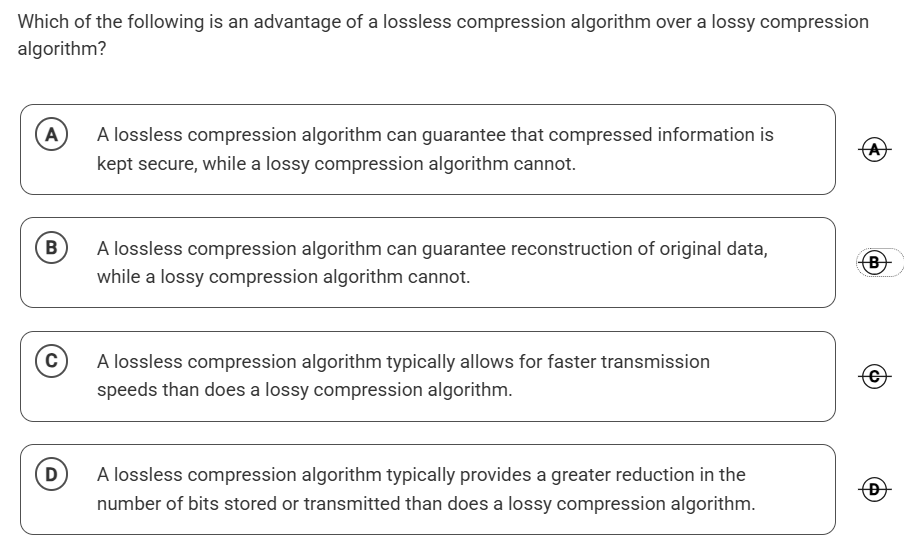 Answer: B
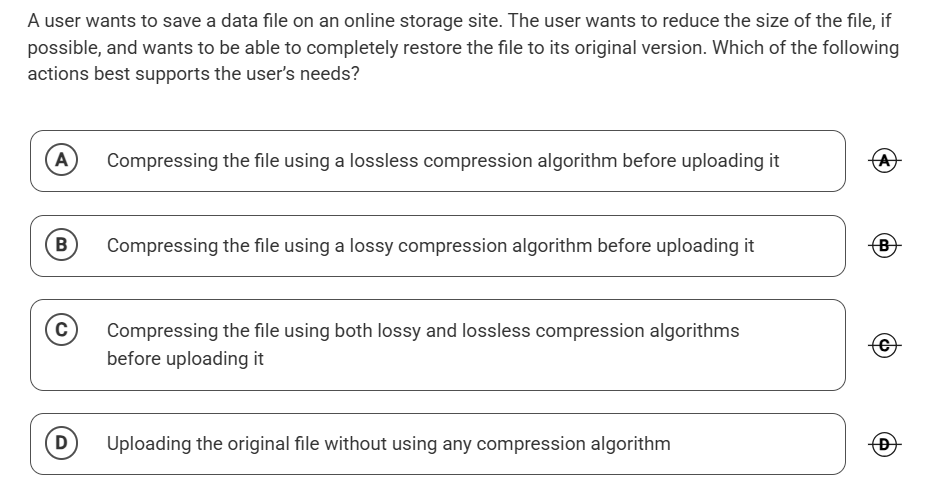 Answer: A
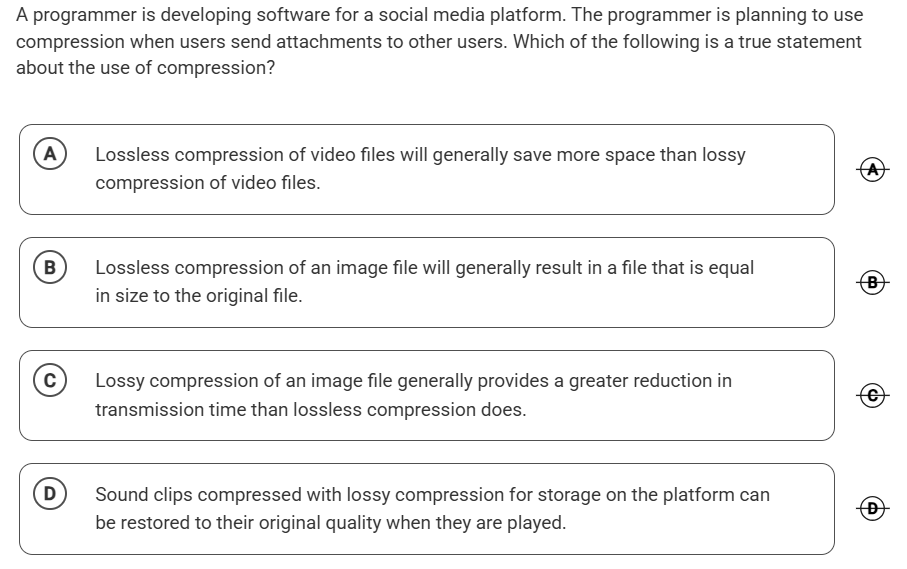 Answer: C