
Computing Bias- Big Idea 5.3
Summary of terms and concepts from the Big Idea 5.3 Lesson
Computing Bias- Big Idea 5.3
Terms to Know
- Explicit Data: Data explicitly given to an algorithm by the user. (address, email, name, etc)
- Implicit Data: Data that is not explicitly given to an algorithm but can be inferred from user behavior. In the example of Netflix- when you watch, and for how long, what types of shows, etc.
- Bias: A systematic error in an algorithm that leads to unfair outcomes for certain groups. Like recommending Netflix originals first because the algorithm wants to prioritize those shows to keep you subscribed to Netflix.
- Biases can come from humans writing them into the algorithm (intentional), or from data used by the algorithm (unintentional)
- Feedback Loops: When an algorithm is trapped in a loop by user affirmations. For example, watching thriller movies, then being only reccommended thriller movies, and continuing to watch them because it is all you are reccomended. It is a loop of affirmation because it sees you continue to watch them.
- Programmers should always seek to reduce bias in their code and algorithms.
MCQ Questions
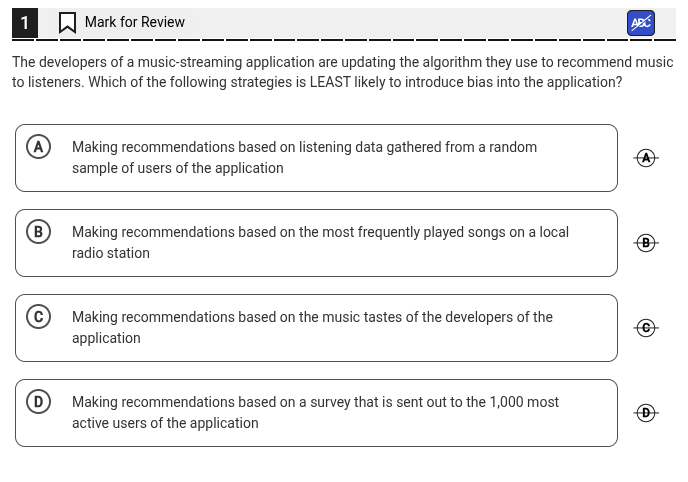
- The answer to this question is A
- Basing the recommendation algorithm on data from a random sample of users will help ensure that the data gathered are more representative of all users of the application. Gathering data from a representative sample can help the developers avoid bias.
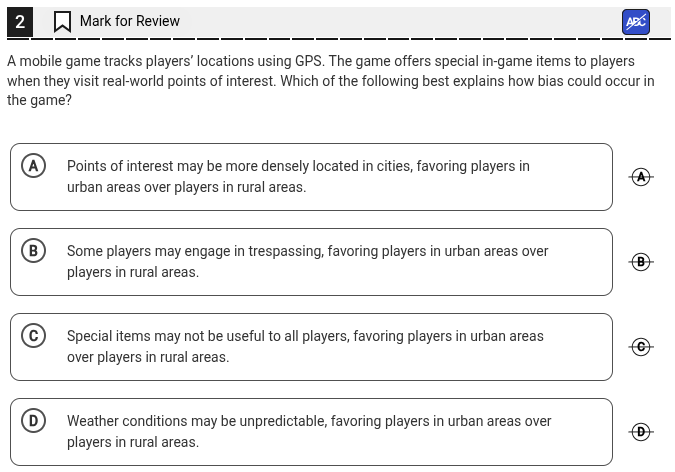
- The answer to this question is A
- Urban areas generally have a higher density of points of interest. In addition, people in urban areas may be able to easily travel to points of interest on foot. These factors can give players in urban areas easier access to special items in the game.
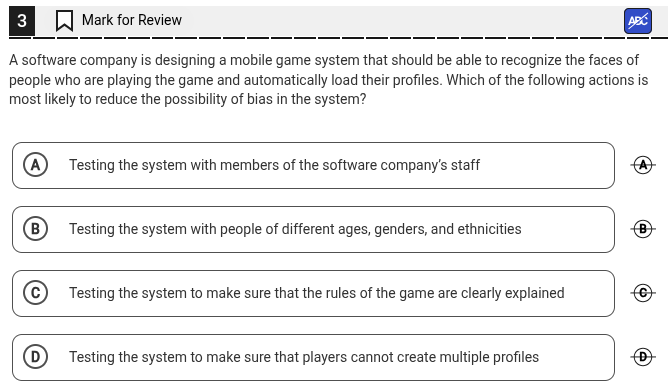
- The answer to this question is B
- Testing the system with people of different ages, genders, and ethnicities will help reduce the chances that the facial recognition system recognizes only people who look like the developers of the system.